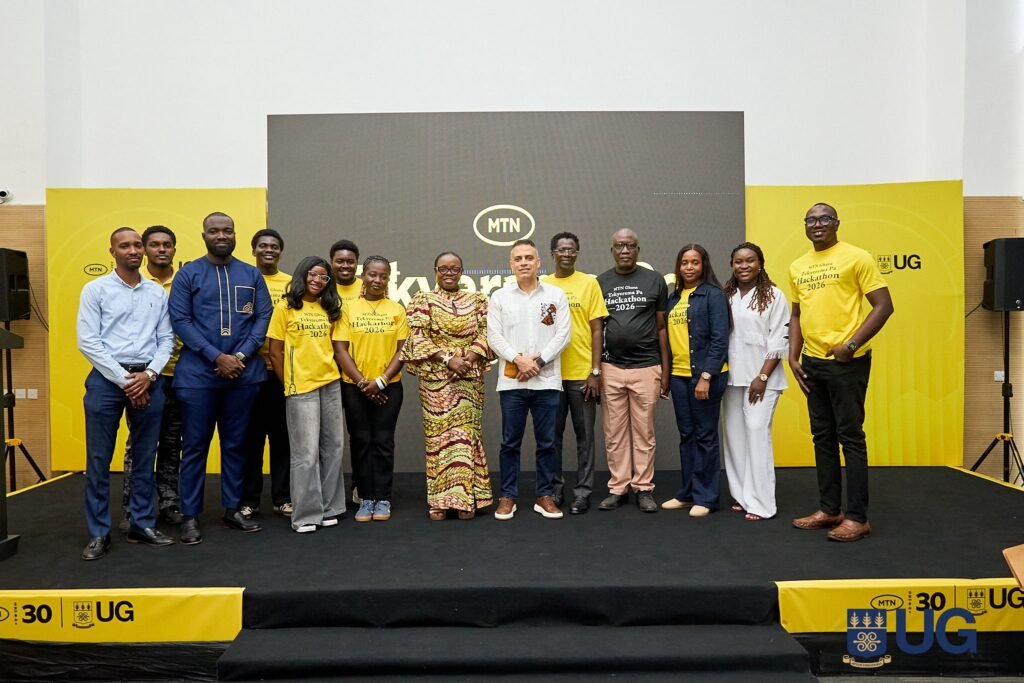
On 30 October 2026, five finalist teams are due to present digital tools built to support communication in Ghanaian languages at the University of Ghana. The MTN Ghana Tɛkyerɛma Pa (an Akan phrase meaning “good tongue”) Hackathon 2026 is hosted by the university’s Human-Computer Interaction (HCI) Lab, and 2026 is its second edition. More than 800 applicants (160 teams) entered this year
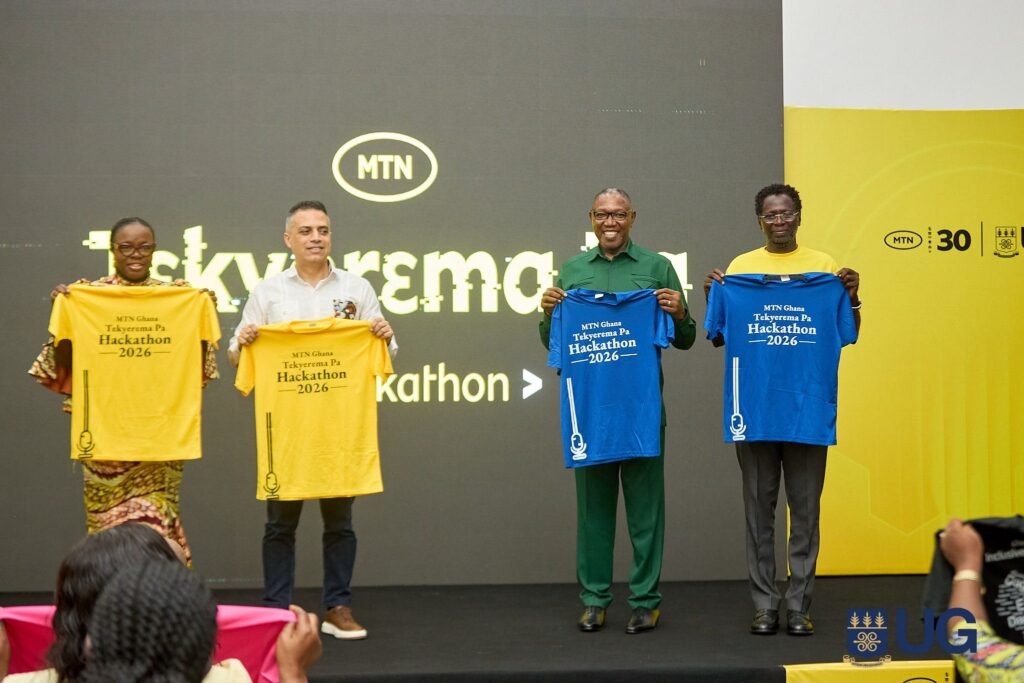
Dr. Akon Obu Ekpezu, a researcher in speech and language technology and natural language processing (NLP), co-coordinates the competition and spoke to Afrolinguals about how it works.
From speech impairment to broader inclusive communication
The 2025 edition focused primarily on speech impairment. “We are seeking to promote inclusivity,” Dr. Ekpezu said. “Last year we focused mainly on advancing AI for speech impairment.” Teams built tools to enable individuals with speech impairment be understood, so that technology could “automatically recognize their speech and give it back to us in a way that we can understand,” as she put it.
The 2026 mandate is wider. “We are still concerned about supporting communication. That’s the key,” she said. Every solution must work in at least one Ghanaian language, and, in her words, “ultimately the solution must be accessible to persons living with disabilities.”
Teams chose among three impact tracks: Accessibility and Personalization, Fintech and Digital Services, and AI and Language Technologies. The last covers speech recognition, text-to-speech (TTS), NLP, and conversational AI.
Mentorship from the first day
The hackathon runs in three phases: an online pre-hackathon, the main event for the top five teams, and post-hackathon support. “We give mentorship support from day one, from the time you have been shortlisted,” Dr. Ekpezu said. After the finale, the winning team get help to “polish their ideas and make it market ready.”
Selection happens online in successive rounds. Teams present, mentors give feedback and score them, and the organizers share the scoring criteria for each stage. Fifteen mentors, across seven categories including UX/UI, Computer vision, Software startup engineering,fintech, AI and language technologies, Product, Data & Digital Transformation, and Accessibility & Personalization guide the teams. Participants can contact mentors directly for feedback during development.
The competition calendar runs as follows:
• July to August: registration, an awareness campaign, team outreach, and an online bootcamp.
• September to October: an ideation sprint with mentor reviews, then in-person mentoring.
• 30 October: the grand finale at the University of Ghana.
• November to December: post-hackathon follow-up.
The bootcamp sessions were streamed live, and the recordings and slides are posted on the 2026 edition page for anyone to watch or download.
Prizes built for market readiness
The top three teams will win GH₵70,000, GH₵20,000, and GH₵10,000. Four special awards recognize Best Digital Experience Innovation, Best Financial Inclusion Solution, Best Female-Led Team, and Best Agentic AI Solution.
MTN Ghana is the main sponsor, joined by seven other sponsors, Dr. Ekpezu said, including Google, Thrive & Shine, Petroleum Hub LTD, NCR Business Hub Limited, and Goivents.She said the prize model is deliberate. “We do not just want solutions that will end up on the shelf,” she said. “We want solutions that are market ready.”
Why language professionals should pay attention
Last year’s mentors included AI and speech technology experts, speech and language therapists, and specialists in language and linguistics. The last group mattered, Dr. Ekpezu explained. “If we’re designing for the Ghanaian [user] and the solution is supposed to be in a Ghanaian language, then of course there’s a need for people to understand the linguistic nuances of how these things will work out when you’re designing a solution.”
The HCI Lab also supplies the building blocks teams work with: the WAXAL dataset of more than 5,000 hours of transcribed speech across five Ghanaian languages (the UGSpeechData), Akan and Ewe ASR and TTS models, and an Akan and Ewe keyboard. Each of these rests on linguistic decisions. Someone must transcribe the speech, settle on orthography, and judge whether a synthetic voice sounds natural to a native speaker.
In the first issue of Afrolinguals, Olanrewaju Samuel, founder of Linguistics Island, argued that linguists are too often treated as laborers on technology projects rather than as partners. A hackathon built on open language resources, with linguistics mentors in the room, is one practical answer to that problem.
What the 2025 edition produced
The first edition, held on 30 May 2025 at the Great Hall of the University of Ghana, was delivered with University College London as part of AT2030, a program funded by UK Aid and led by the Global Disability Innovation Hub. Teams used a curated Impaired Speech Dataset in the Akan.
Five finalists presented. Kasa Noma, an ASR assistant that plugs into messaging apps such as Telegram, took first place. WhisperWave, a 3D speech therapy app for children powered by a Twi-trained model, took second. Kasayie, built with a minimalist interface inspired by co-design, transcribes impaired Twi speech into standard Twi text.
The rules also did quiet work. Teams of up to five had to include at least one female and, preferably, one person with a speech impairment. Between the two editions, the number of teams grew from 50 to 160.