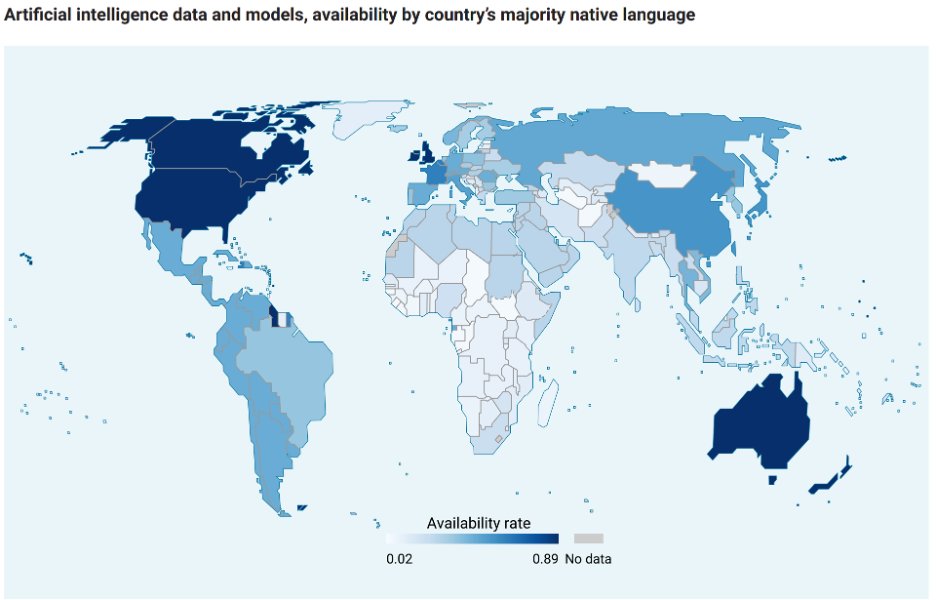
The pattern on that map is not subtle. Large parts of Africa sit at the low end of the scale, shaded to show scarce or nonexistent AI resources in the languages people actually speak at home. This is not a minor technical gap. It is the foundation for a set of interconnected problems in health, safety, education and national sovereignty that the report lays out in detail. Understanding them, and what needs to change, matters for anyone building the future of African language technology.
i. The scale of the problem
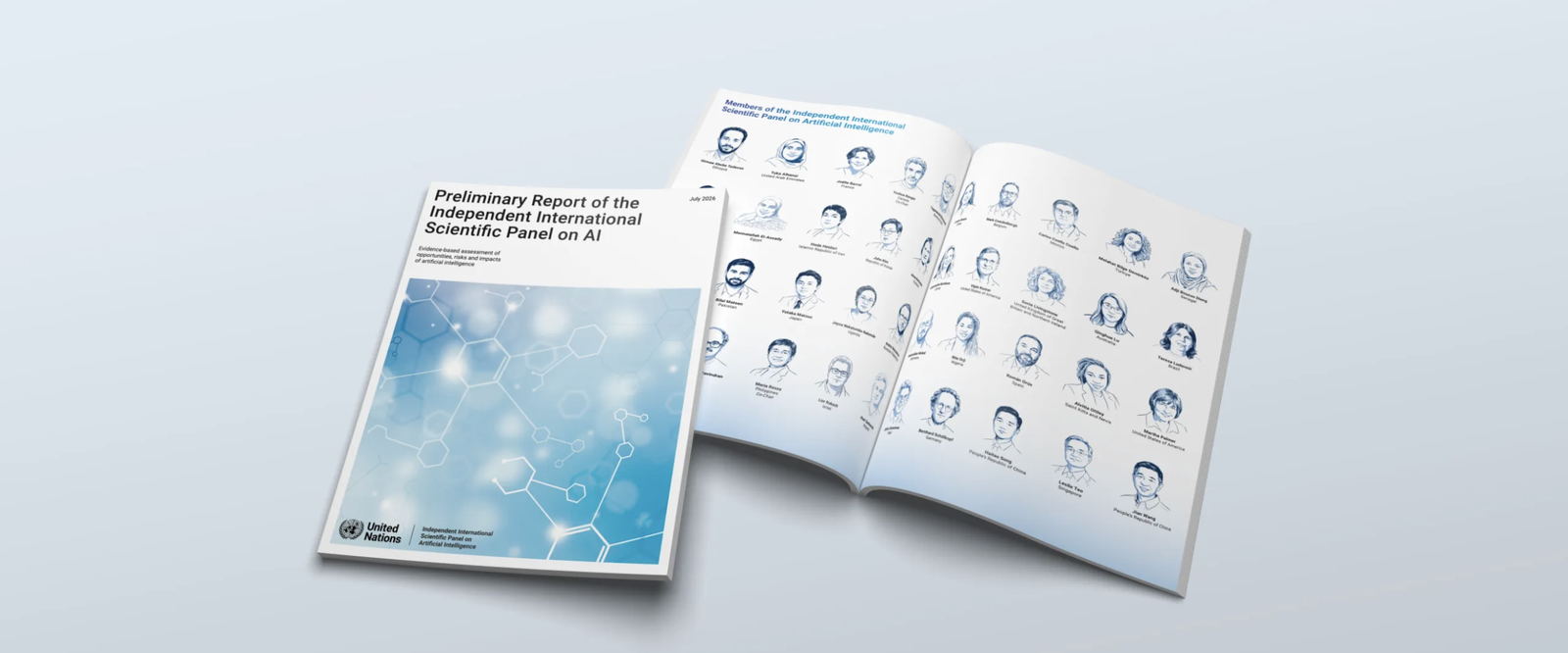
More than 7,000 languages are spoken worldwide. According to the Independent International Scientific Panel on AI’s Preliminary Report (July 2026), AI development and evaluation infrastructure reflects only a small fraction of them. That is despite the fact that over 1,000 languages already have the social, digital and data foundations needed for meaningful inclusion in AI systems. The technical door is open for far more languages than currently walk through it. What is missing is investment, not possibility.
Even multilingual models trained on dozens of languages perform well for only a small subset of them. Recent studies cited in the report show that the performance gap between dominant languages like English and underrepresented languages is not narrowing. It is persisting, even as the overall technology improves.
ii. When mistranslation becomes a medical emergency
The report includes a case that should be read by anyone tempted to treat this as an abstract statistics problem. In Tigrinya, spoken by 7 to 9 million people in Eritrea and northern Ethiopia, machine translation systems have rendered “smallpox” as “syphilis,” “gonorrhoea” as “diabetes,” and turned a clinical note reading “you have been given intravenous antibiotics” into “you have been given intravenous insecticides.”
These are not hypothetical risks. They are documented translation failures in a language spoken by millions, in exactly the kind of high-stakes medical context where accuracy is a matter of life and death. A separate review cited in the report, focused specifically on natural language processing for African languages in healthcare, found the same pattern repeating across the continent: cultural and linguistic bias, poor adaptation to medical terminology, limited explainability, and translation errors capable of affecting diagnosis and treatment decisions.
The report’s own conclusion is direct. AI systems are not ready for use in high-stakes settings unless they have been properly adapted, constrained and tested for the relevant linguistic and cultural context. That is, in effect, an argument that professional translation and interpretation are not optional add-ons to AI deployment in Africa. They are a safety requirement.
iii. Access is not the same as capacity
One of the report’s most useful framings is that the “AI divide” is not simply about who has access to AI tools. It is about who has the capacity to shape how AI develops in the first place. The report breaks that capacity into four interlinked dimensions:
Having AI compute located within a country’s own borders is increasingly treated as a matter of national autonomy and security, not a convenience. Most African countries have limited domestic capacity here.
Countries need the ability to cultivate, attract and retain people who can build and evaluate AI systems, including in African languages themselves. Without local NLP researchers and computational linguists, language inclusion depends entirely on outside priorities.
Governance capacity. According to the United Nations Conference on Trade and Development, 118 countries, most of them in the global South, are not engaged in the major AI governance discussions currently shaping global rules. Less than one third of developing countries have a national AI strategy at all.
Inclusion of a language in AI requires targeted funding for datasets, benchmarks and evaluation infrastructure specific to that language. Without it, a language can remain technically “includable” indefinitely while never actually being included.
These dimensions reinforce each other. A country without governance capacity struggles to negotiate for infrastructure investment. A country without infrastructure struggles to retain the talent that would build datasets for its own languages. The gap does not close on its own. It has to be deliberately closed.
iv. The gap becomes a trust and safety problem
The consequences of this gap are not limited to inconvenience or exclusion. The report notes that AI models produce unsafe outputs more readily in low-resourced languages, and that safety and misuse safeguards built for English-language contexts often do not transfer to how these tools are actually used locally. It gives a direct example: AI-powered scams in East Africa can operate through mobile money platforms in local languages, precisely the kind of usage pattern that safeguards designed elsewhere are not built to catch.
A similar pattern shows up with AI companion chatbots, now widely used for mental health support and companionship. The report finds that the gap between AI therapeutic capability in English and in other languages is growing, with critical cultural and contextual nuance lost through what it calls translation-based workarounds.
When AI systems already prone to harmful sycophantic behaviour are then offered in other languages through naive machine translation layered on top, the report notes those harms can worsen rather than improve.
In a separate health-sector case study, the report observes that AI produced measurable benefits only where reliable translation into local languages existed alongside functioning referral systems and clinical capacity. Reliable language infrastructure was not a nice addition. It was one of the conditions that determined whether the technology worked at all.
v. What needs to happen, and by whom
The report’s evidence points to a set of concrete responsibilities that fall on different actors, not a single fix.
AI developers and companies need to treat evaluation and safety testing in low-resource languages as a release requirement, not a post-launch afterthought, particularly for health, financial and mental health applications.
Governments need to move from the current state, where less than a third of developing countries have a national AI strategy, toward funding domestic datasets, benchmarks and public data infrastructure for their own languages, and toward claiming a seat in the global AI governance discussions that 118 countries are currently missing from.
Funders and multilateral institutions need to treat targeted investment in underrepresented language datasets and benchmark initiatives as core AI development funding, not a niche inclusion project.
Language professionals, linguists and African NLP researchers, including the growing body of work coming out of communities like AfricaNLP, are the people best positioned to build, validate and audit these systems in context. Their expertise is the difference between a translation tool that works and one that turns antibiotics into insecticides.
Regulators need measuring frameworks adapted to the realities of the global South rather than imported wholesale from contexts where the underlying language data already exists.