
1. AI can turn "antibiotics" into "insecticides." Literally.
This one stopped me. In Tigrinya, a language spoken by 7 to 9 million people in Eritrea and northern Ethiopia, machine translation has mistranslated smallpox as syphilis, gonorrhoea as diabetes, and “you have been given intravenous antibiotics” as “you have been given intravenous insecticides.”
Read that last one again. In a medical setting, that’s not a funny glitch. That’s a patient getting the wrong treatment because a machine guessed wrong. This is exactly why “AI can translate now, who needs interpreters” is such a dangerous take.
2. There's a map, and it's not pretty
The report includes a map from something called the EquATE Language AI Readiness Index. It shows how much AI data and how many AI models exist for the language most people in each country actually speak at home.
Big parts of Africa show up at the bottom of that scale. Not because African languages are somehow harder or less “AI ready” in some fixed sense, but because almost nobody has invested in building the data and tools for them. It’s a funding map disguised as a technology map.
3. More than 1,000 languages are ready to go. Nobody's building for them yet.
Here’s the hopeful part buried in the bad news. The report says over 7,000 languages exist worldwide, and current AI barely touches most of them. But it also says more than 1,000 languages already have the social, digital and data foundations needed for real inclusion in AI systems.
Translation: the technical excuse doesn’t hold up anymore. The tools to include way more languages already exist in seed form. What’s missing is the decision to actually fund and build them.
4. This isn't just an "access" problem. It's a power problem.
A lot of people assume the fix is simple: get more people phones and internet, problem solved. The report pushes back on that hard. It says the real “AI divide” is about who has the capacity to shape how AI gets built, not just who gets to use it afterward.
That capacity has four parts: having your own computing infrastructure, having your own trained talent, having governance capacity to regulate the tech, and having real investment in your own data. Miss any of these and you’re stuck consuming AI built by and for someone else’s language and context. This is why “just add more translation” isn’t a fix on its own. It has to come with real investment and real seats at the table.
5. Low-resource languages aren't just lower quality. They're less safe.
This is the part that should worry you as a professional, not just interest you. The report states plainly that AI models produce unsafe outputs more often in low-resourced languages, and that safety safeguards built for English don’t automatically work elsewhere.
One example given: AI-powered scams in East Africa running through mobile money platforms, in local languages, where safety filters built somewhere else just don’t catch them. Another: AI companion chatbots offering mental health support in other languages through rough machine translation, losing exactly the cultural nuance that keeps people safe. Bad translation here isn’t an inconvenience. It’s a real risk to real people.
6. Governments are mostly not even in the room
Want a stat to bring up next time someone says “AI will fix itself eventually”? According to the report, 118 countries, mostly in the global South, are not part of the major AI governance conversations happening right now. Less than a third of developing countries even have a national AI strategy.
This matters for language advocates because governance is where language requirements get written into law, into procurement contracts, into public services. If your country isn’t at the table, decisions about how AI handles your language get made without you.
7. The report itself says the fix has to be deliberate
Here’s the honest part. The report doesn’t say this gap will close on its own as the technology matures. It says the opposite, that the performance gap between dominant and underrepresented languages isn’t narrowing even as AI generally gets better.
Closing it takes actual choices: targeted investment in datasets, benchmarks built for local languages and cultures, testing before deployment in high-stakes settings like health, and yes, keeping trained human translators and interpreters in the loop instead of assuming raw machine output is good enough.
Why this matters for you specifically
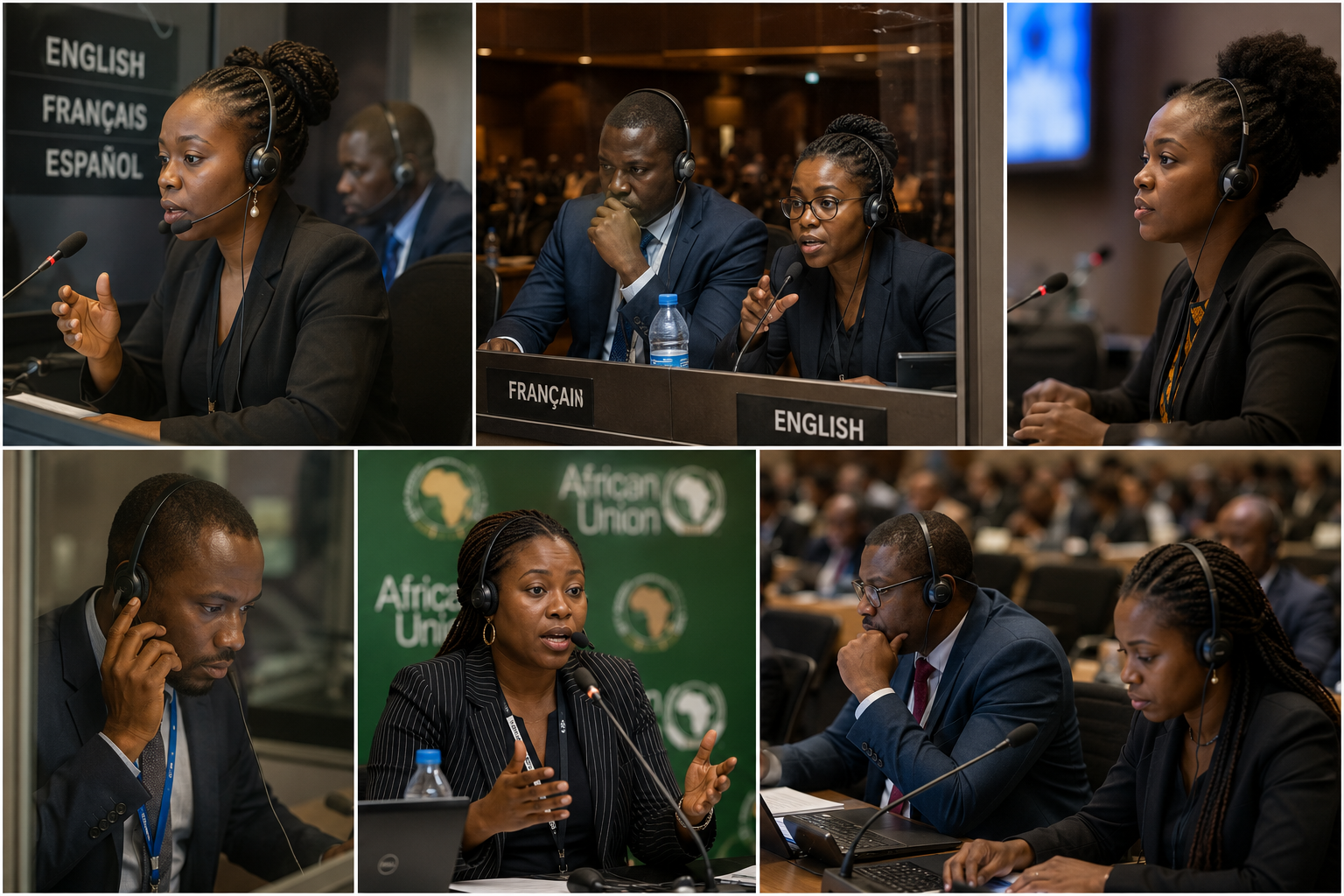
If you’re a translator or interpreter, this report basically hands you the evidence base for an argument you’ve probably been making for years: that your work isn’t a cost to cut, it’s a safety layer. Quote the Tigrinya example next time someone suggests replacing an interpreter with an app in a clinic. Quote the East Africa scam example next time someone says local-language safety just isn’t a priority yet.
If you’re a language advocate or policy person, this gives you real numbers to push with: the governance gap, the investment gap, the fact that over 1,000 languages are sitting there ready for inclusion if anyone would just fund it.
And if you work in African languages specifically, there’s a growing research community, groups like AfricaNLP, already doing exactly this kind of work. This report is proof that what they’re building matters at the highest levels of global policy, not just in academic papers nobody outside the field reads.